


Panoramic door design ideas often begin with a simple thought: “What if your space felt more open, more connected, and filled with natural light?”
Beyond making a room feel brighter, natural light has other benefits, such as supporting comfort, mood, and the way people experience their indoor spaces.
In many modern homes, that shift starts with how large openings and glass doors reshape the room from the moment you walk in. A living space that once felt enclosed can suddenly open up to the outdoors, creating a smoother, more natural flow.
How Modern Glass Doors Transform Living Spaces
For a long time, patio doors followed a familiar pattern: open, close, and stay within a fixed path. But as homes began to change, so did expectations. Panoramic doors™ introduced a different way of thinking, where multiple panels move independently, allowing the space to adjust throughout the day.
Instead of committing to a single fixed opening, you can shift between a small opening for fresh air and a wide, open layout that turns the indoors and outdoors into one big connected space.
This flexibility, paired with smooth operation and cleaner sightlines, is what makes panoramic doors feel less like a feature and more like part of how the home naturally functions.
How Panoramic Door Design Ideas Transform Everyday Living Spaces
It often starts in the spaces you use the most. A kitchen that once felt tucked away begins to open into the patio, making it easier to move between cooking, gathering, and stepping outside.
In the living room, glass doors bring in natural light that shifts throughout the day, changing how the space feels from morning to evening.
Over time, these small changes begin to reshape how the home works. Indoor and outdoor areas feel less separate and more like part of the same environment.
Apart from design, modern patio ideas influence how people live, move, and connect within their space.
Types of Large Openings and Sliding Glass Systems
Modern homes are increasingly designed to feel open, connected, and filled with natural light. The right glass system plays a key role in shaping how indoor and outdoor spaces come together.
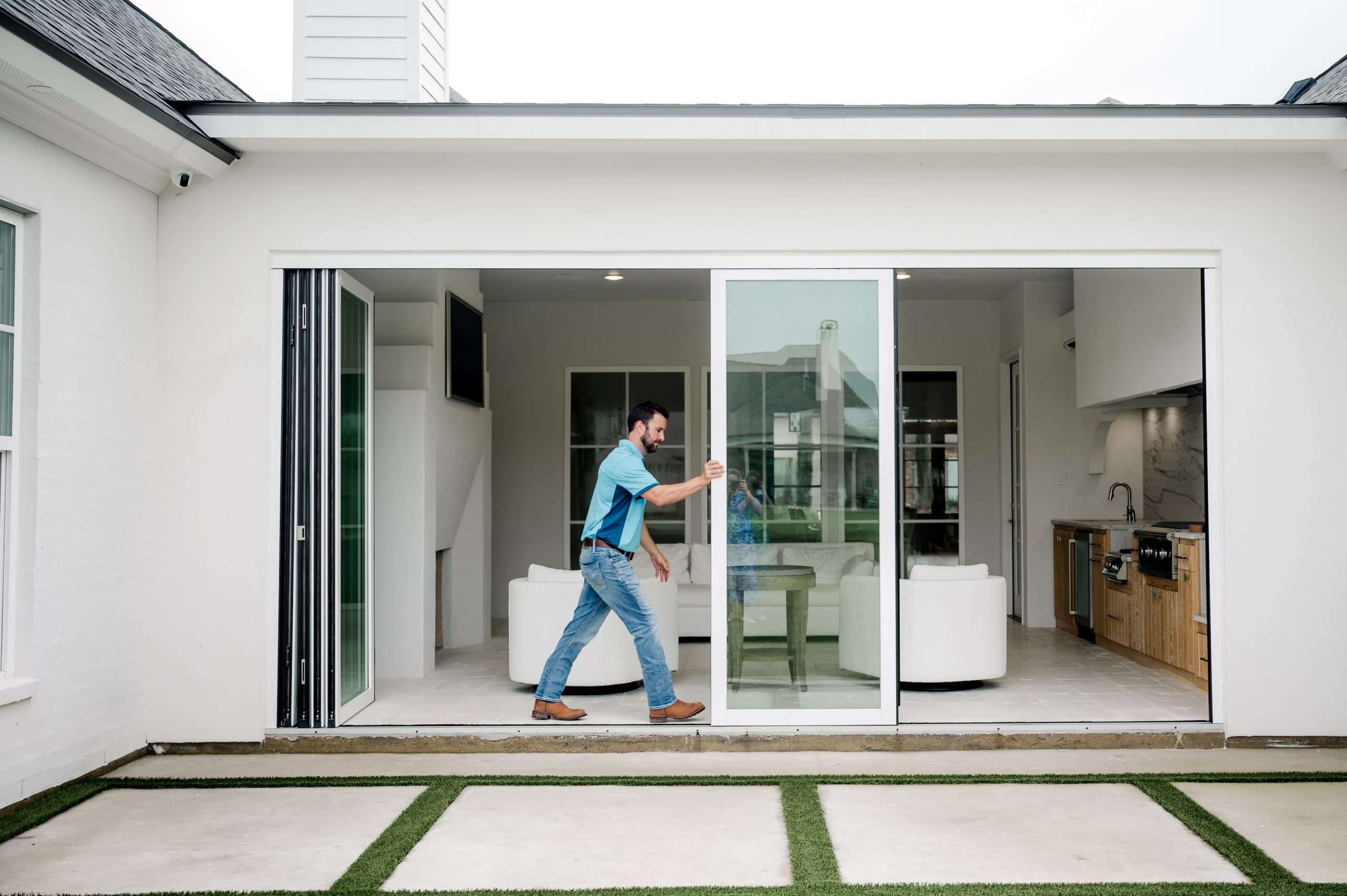
Sliding Glass Systems for Large Openings and Flexible Design
Behind that open, effortless look is a system designed to move with you. Sliding glass doors are built with multiple panels that glide along a track, creating large openings without interrupting the flow of the space.
Some systems allow panels to stack neatly to one side, while others can disappear into a wall pocket, leaving the opening completely clear.
This flexibility makes a difference in everyday use. You might open just one panel for a quick step outside, or expand the entire wall when the space calls for it.
Folding and Bi-Fold Patio Doors
Folding and bi-fold patio doors take a different approach to opening up space. Instead of sliding, the panels are connected and fold together as they move along a track, stacking neatly to one or both sides.
This makes them a practical option for creating wide, clear openings, especially in larger patios. While the stacked panels remain visible, they still allow for a strong indoor-outdoor connection when fully opened.
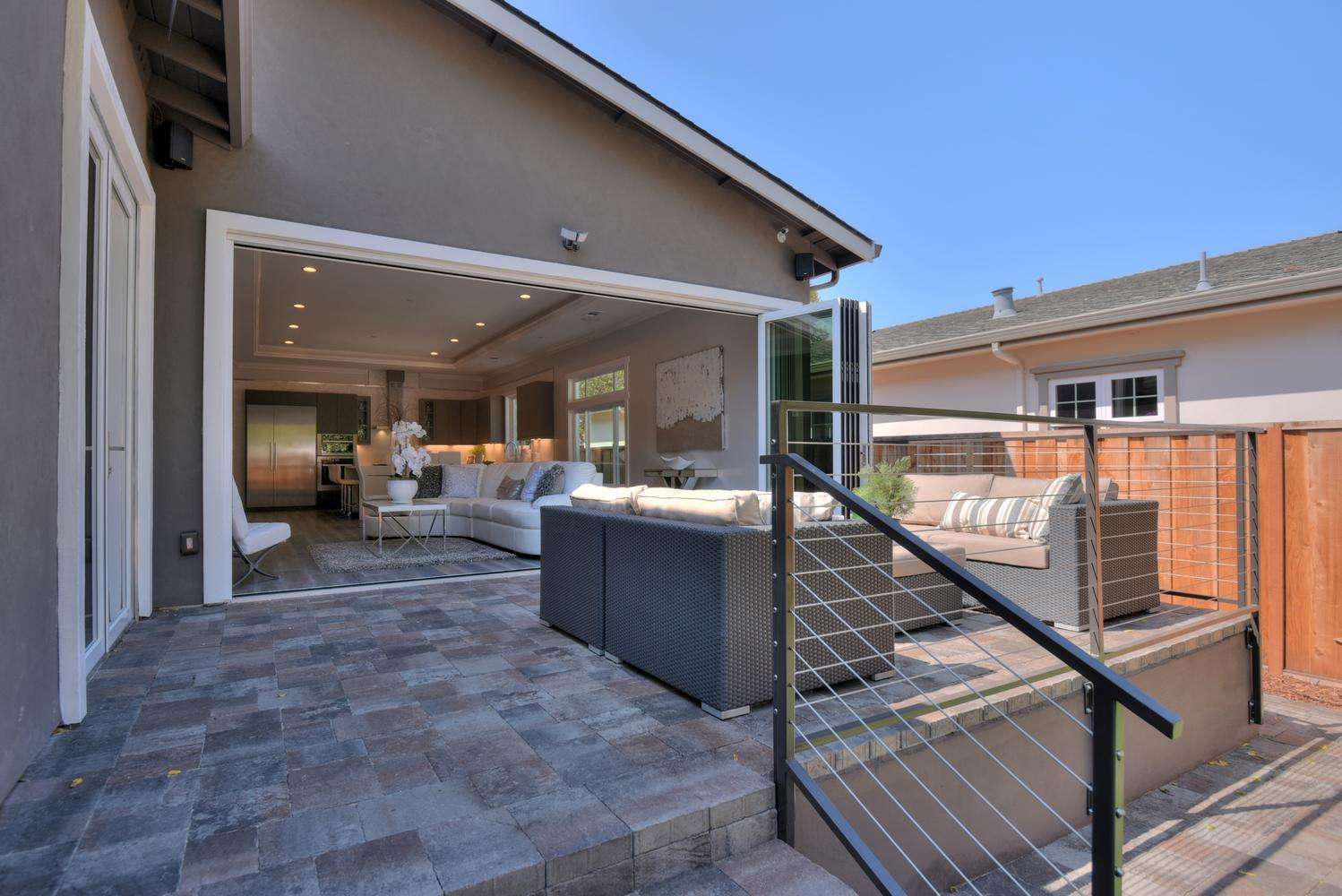
Lift-Slide and Multi-Panel Systems
Lift-slide and multi-panel systems are designed for larger, heavier glass doors where performance matters. Lift-slide doors raise slightly before moving, helping improve thermal performance and weather resistance.
Multi-panel systems, on the other hand, use several panels that slide and stack along a track, creating flexible configurations. Depending on the design, these systems can support wider openings while maintaining smooth operation and balanced panel sizing.
Pivot and Corner Opening Ideas
Some designs go a step further, moving beyond straight openings into something more architectural. Pivot doors, for example, rotate on a single point, creating a wide, clean entry that feels both simple and striking.
Corner openings take a different approach by removing the need for a visible post, allowing two sides of a space to open at once.
In modern homes, these ideas are often used to create a stronger sense of flow, where boundaries feel less defined, and the layout feels more open.
Can Glass Doors Really Maximize Panoramic Views?
It is a fair question, especially when thinking about how much of the view you actually get to enjoy.
Modern glass doors are designed with slim frames and wider panels, reducing visual interruptions and allowing panoramic views to take center stage. Instead of looking through a series of divided sections, the eye moves naturally across the entire opening.
Breathtaking views become part of everyday living, rather than something seen from a distance.
Materials and Frames for Modern Glass Doors
Once the layout begins to take shape, the materials start to define how the space feels day to day. The frame you choose influences not just the look, but how the doors perform over time. Architects and designers working on high-end builds consistently choose materials based on both functionality and long-term durability — and it matters more than many homeowners initially expect.
Aluminum frames are known for their strength and slim profile, allowing for more glass and cleaner sightlines.
Wood-clad frames bring warmth and texture, blending modern glass doors with more natural interiors.
Vinyl options offer a balance of durability and low maintenance, making them practical for everyday use.
Each material plays a role in durability, performance, and overall design, shaping how the space looks and functions over time. The right choice will suit both the aesthetic of the home and the climate it needs to protect against — whether that is heat, wind, or coastal moisture.
How Panoramic Door Systems Are Engineered to Perform
While the look is what draws most people in, it is the engineering behind the system that makes it truly livable. Modern panoramic doors are not simply oversized standard glass panels — they consist of precisely engineered components designed to handle large spans without sacrificing ease of operation.
Each system is built to protect against air infiltration, water intrusion, and temperature fluctuations. Track systems are engineered so that panels glide smoothly even across wide openings, and frames are designed to remain structurally sound under varied conditions.
For homeowners on the coast or in regions with more demanding climates, this level of engineering is especially important. A well-built system should perform reliably season after season — elevating the living experience rather than creating maintenance headaches down the line.
Luxury Sliding Doors and Everyday Performance
As designs become more open, performance becomes just as important as appearance. Modern glass doors are built to manage temperature, airflow, and weather exposure without affecting that clean look in your space.
For projects where heat gain is a major concern, triple-pane glass can also support stronger thermal performance. The U.S. Department of Energy notes that advanced window technologies, including triple-pane designs and Low-E coatings, can help improve energy efficiency in homes.
Track systems also play a role in how everything comes together. Smooth, well-designed tracks support easy movement while keeping transitions between indoor and outdoor areas subtle and uninterrupted.
In the end, these elements work quietly in the background, allowing large openings to feel comfortable, efficient, and easy to live with.

Where Do Panoramic Patio Ideas Work Best?
By this point, it becomes easier to see how panoramic patio ideas translate into real spaces.
In residential homes, they often appear in living rooms that open onto patios, or kitchens that extend into outdoor dining areas. In larger layouts, sliding glass systems are used to frame panoramic views while maintaining a natural flow between indoor and outdoor spaces.
In commercial projects, the same approach can shape restaurants, lounges, or shared spaces where flexibility matters. Designers and builders tend to use these systems where light, openness, and movement are part of the experience, allowing each space to adapt to how it is used.
Traditional fixed walls and standard patio doors simply cannot achieve the same level of openness or adaptability. For homeowners and developers looking to discover a more connected way of living, panoramic systems offer options that set a new benchmark in both design and functionality.
How to Choose the Right Panoramic Door System
With so many configurations available on the market today, finding the perfect fit for your project can feel like a significant decision. The good news is that the process becomes much easier when you know what to look for and have the right information to guide you.
Start by thinking about how you want to use the space. Do you want a wide opening ideal for entertaining, or a more flexible system that lets you adjust airflow and light throughout the day? Consider your budget, your home's architectural style, and the conditions your doors will need to handle.
It also helps to work with builders, architects, or designers who understand how these systems are engineered — and who can help you find a solution that suits both your vision and your practical needs. Explore the information available on the website, or reach out directly to discover which system is the right choice for your home.
Bringing Panoramic Door Design Ideas Into Your Next Project
As these ideas come together, panoramic door design ideas start to feel less like a concept and more like a practical way to shape modern living.
With the right approach, these designs can support both everyday living and long-term flexibility that feels natural and easy to live with. A well-chosen system will not just open up your space — it will elevate how you experience your home every single day.
If you’re exploring options or planning an upgrade, Panoramic Doors™ can help you choose the right system for your space.